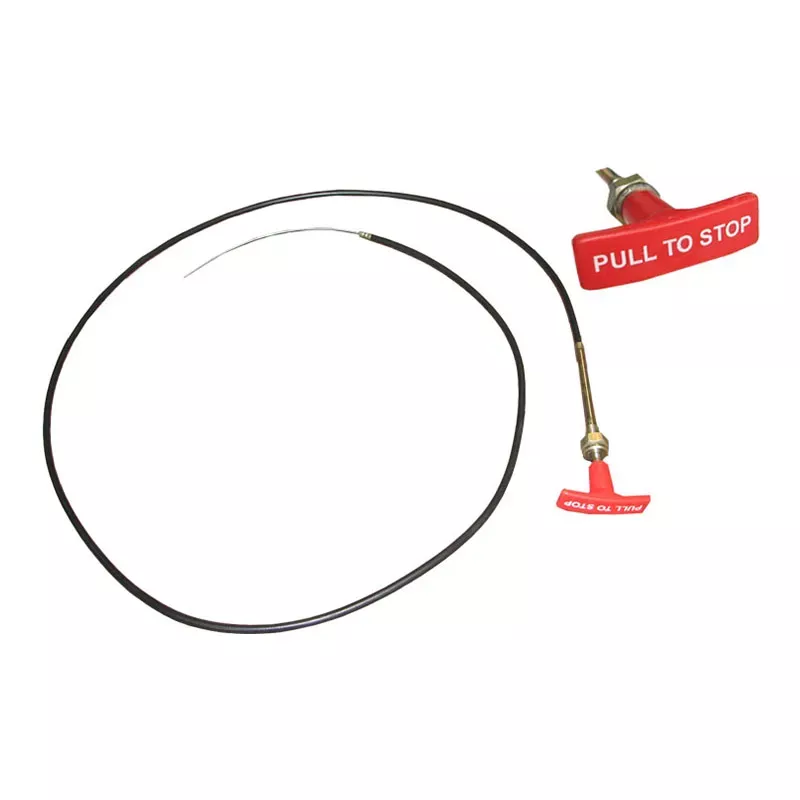
When your engine stop cable breaks, you’re stuck with two lousy options – stall the engine by loading it down or disconnect the battery. Neither one’s good for your equipment, and both can leave you stranded at the worst possible time. This 1.5-meter universal stop cable with its bright red T-handle gets you back to proper, controlled shutdowns so you can operate safely again.
What You’re Getting
- 1.5-meter cable length handles most tractor and equipment setups without being too long
- Bright red T-handle stands out in an emergency and gives you a solid grip even with gloves
- Standard 9mm thread fits the most common diesel engine stop mechanisms
- Heavy-duty construction that won’t kink, bind, or corrode when you need it most
- Universal design works on a wide range of diesel engines and equipment
Built for Real Farm Work
This stop cable works on older tractors, stationary engines, generators, compressors, and industrial equipment where manual shutdown is required. It’s particularly handy for compact to mid-size equipment that still relies on mechanical fuel shutoff systems. Whether you’re running an old utility tractor for chores, operating a generator for remote work, or maintaining equipment that doesn’t have electric shutoffs, this cable gives you reliable engine control.
Made to Last
Farm equipment takes abuse, and engine controls are no exception. This cable uses proven construction with smooth inner wire operation that won’t stick or bind even after exposure to weather, vibration, and daily use. The outer sheath protects the inner cable while the red T-handle provides positive grip in all conditions.
Installation Notes
Most installations are straightforward – the 9mm threaded end typically screws right into your injection pump or stop mechanism. Take a photo of your old cable routing before removal to avoid confusion later. Route the new cable away from hot surfaces and sharp edges, and leave slight slack at full extension to prevent premature wear. Test the action several times before putting the equipment back in service.