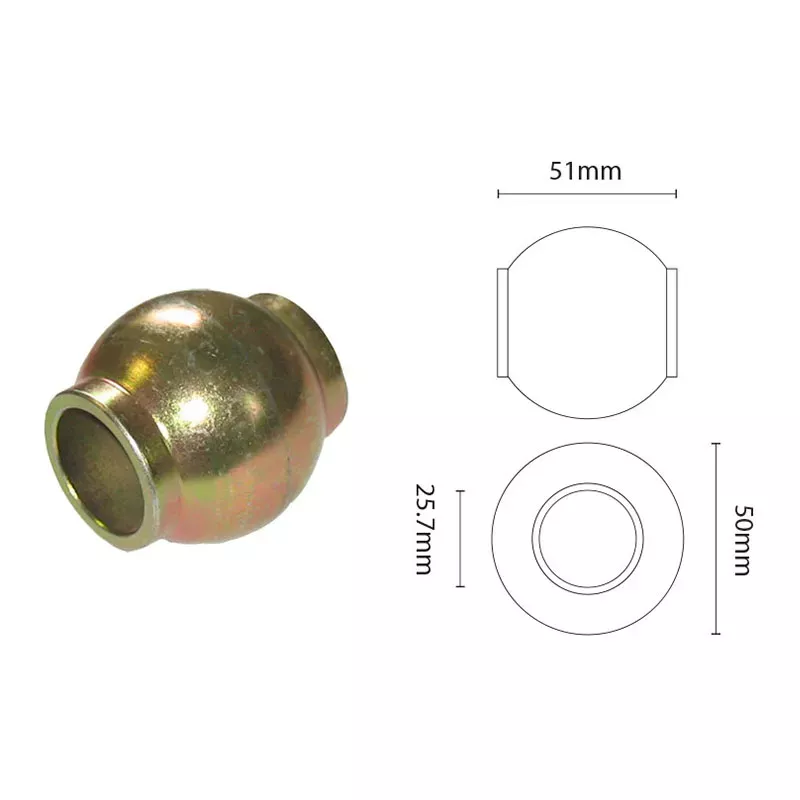
If you’ve spent much time hooking up heavy implements, you know that top link ball is the unsung hero of your three-point hitch. It’s that critical upper connection that keeps your disc, plow, or cultivator positioned exactly where it needs to be. When it’s worn out or missing, you’ll be fighting with implement angles all day long. This Category 2 ball gives you the solid connection you need to get your implements working right.
What You’re Getting
- Precision 1-inch pin hole fits standard Category 2 hitch systems perfectly
- Heavy-duty steel construction that won’t bend under load or crack from stress
- Smooth ball surface lets your implement pivot naturally as you work uneven ground
- Zinc-plated finish stands up to mud, manure, and weather season after season
- Universal design works with most tractor brands and implement manufacturers
Built for Real Farm Work
Category 2 hitches are found on utility tractors from about 40 to 100 horsepower—the workhorses that handle most of the heavy lifting on farms. Whether you’re pulling a 12-foot disc through stubble, running a chisel plow in tough clay, or moving a big rotary cutter through thick grass, this ball handles the stress and keeps your implement tracking true.
Made to Last
This isn’t some lightweight part that’ll fail when you need it most. The high-strength steel construction handles the constant stress of lifting heavy implements and the side loads that come from working slopes or rough ground. That zinc plating isn’t just for looks—it keeps rust from eating away at the ball surface and pin hole.
Installation Notes
Direct replacement for worn or damaged top link balls on Category 2 systems. The 1-inch pin hole is standard sizing, so it’ll work with your existing top link and implement mounting points. When you’re installing, make sure everything lines up properly before tightening—a little grease on the threads makes future removal much easier.