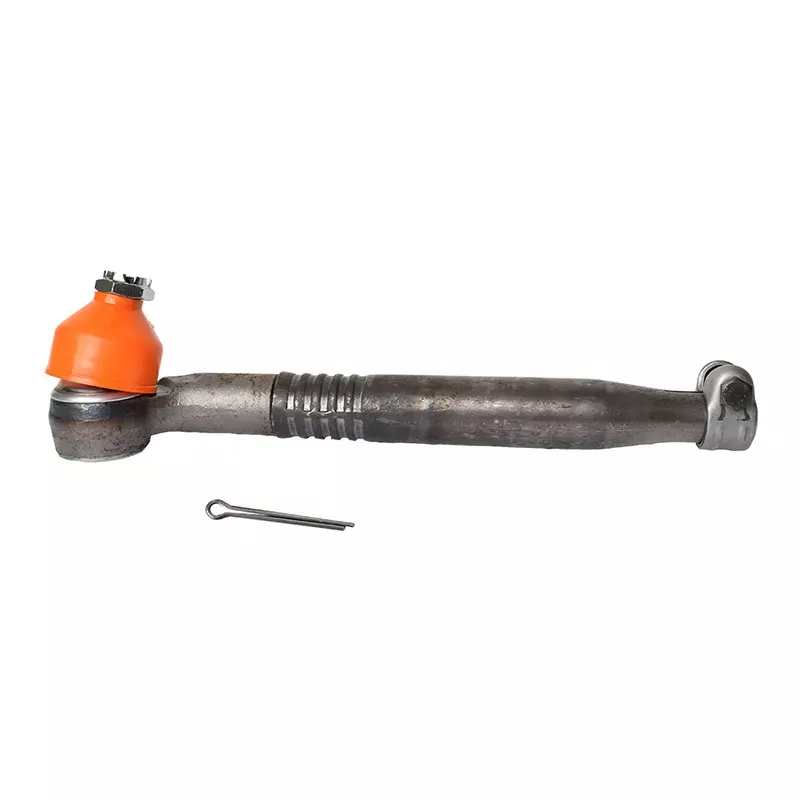
When your steering starts feeling loose or you find yourself constantly correcting to keep straight in the field, worn track rod ends are usually the culprit. This essential steering component connects your steering system to the front wheels, translating every turn of the wheel into precise tire movement. A worn track rod end doesn’t just make driving annoying—it’s a real safety concern when you’re working near ditches or on hillsides.
Key Features
- M22 x 1.5 left-hand thread design prevents loosening under normal steering loads
- 380mm overall length engineered specifically for Case IHC 56 Series geometry
- Heavy-duty ball joint construction handles the constant articulation of farm work
- Direct replacement for original equipment—no modifications needed
- Built to withstand the punishment of loader work, field operations, and road transport
Built for Real Farm Work
Your Case IHC 956, 956XL, 1056, and 1056XL tractors are versatile workhorses that handle everything from cultivation and planting to loader work and hay production. These mid-range tractors pack enough power for serious field work while staying nimble enough for farmyard tasks. Precise steering control is critical whether you’re following furrows during planting or maneuvering around tight barn doors.
Made to Last
This isn’t some lightweight automotive part dressed up for farm duty—it’s purpose-built for agricultural applications. The forged construction resists bending under heavy steering loads, while the hardened ball and socket maintain tight tolerances despite constant movement and vibration. The left-hand thread configuration is specifically designed to resist loosening during normal steering operation.
Good to Know
Always replace track rod ends in pairs since if one’s worn out, the other isn’t far behind. Before removing the old end, measure its position or count the exposed threads so you can set the new one close to the same spot. Use a proper ball joint separator rather than hammering on steering components. After installation, you’ll need a front-end alignment to prevent premature tire wear and ensure proper steering geometry.