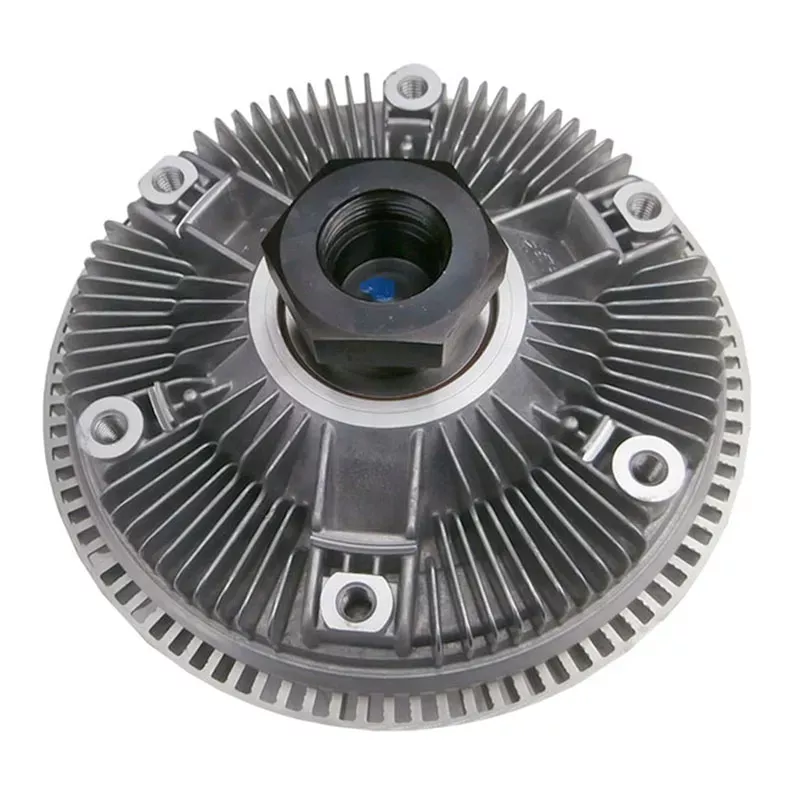
When your Ford TM or Case MXM starts running hotter than usual or the fan seems to be roaring constantly, it’s time to look at your viscous fan clutch. This smart cooling component knows exactly when your engine needs maximum airflow and when it can ease off to save fuel and power. These 100-180 horsepower machines work hard pulling heavy implements, running PTO equipment, or operating hydraulics all day. A failing clutch either locks up and wastes fuel or won’t engage when you need cooling most.
What You’re Getting
- Electronic control that engages based on temperature sensors and ECU commands, providing cooling only when needed to save fuel and reduce noise
- Precision viscous coupling that engages smoothly – no shock loads on your belts or water pump
- Heavy-duty construction built to handle the heat and vibration near turbocharged engines
- Direct replacement design that mounts exactly like your original clutch
- Sealed housing that maintains proper fluid levels throughout the clutch’s service life
Built for Real Farm Work
Your Ford TM or Case MXM represents serious capability in the 100-180 horsepower range. Whether you’re running a grain drill in spring, pulling a heavy cultivator, or powering a hay baler all summer, these tractors use sophisticated electronic control for their cooling system. The viscous clutch works with your tractor’s computer to provide exactly the cooling needed without wasting power on unnecessary fan operation.
Made to Last
This clutch contains specially formulated silicone fluid that responds to temperature changes throughout its service life. The system uses heat-resistant components that survive the extreme temperatures near modern turbocharged engines. Quality seals prevent fluid leakage that would make the clutch inoperative, and precision bearings handle the constant speed variations.
Installation Notes
Handle the new clutch carefully – never store it on its side or upside down as this can cause the silicone fluid to migrate. Check your fan blades for cracks or imbalance before installation, as a damaged fan will quickly destroy a new clutch. After installation, the fan should engage smoothly as temperature rises, not suddenly kick on at maximum speed. If you’re having cooling problems, also check the wiring harness (part 44222) as many cooling system problems are misdiagnosed as fan clutch failures when the real issue is wiring.